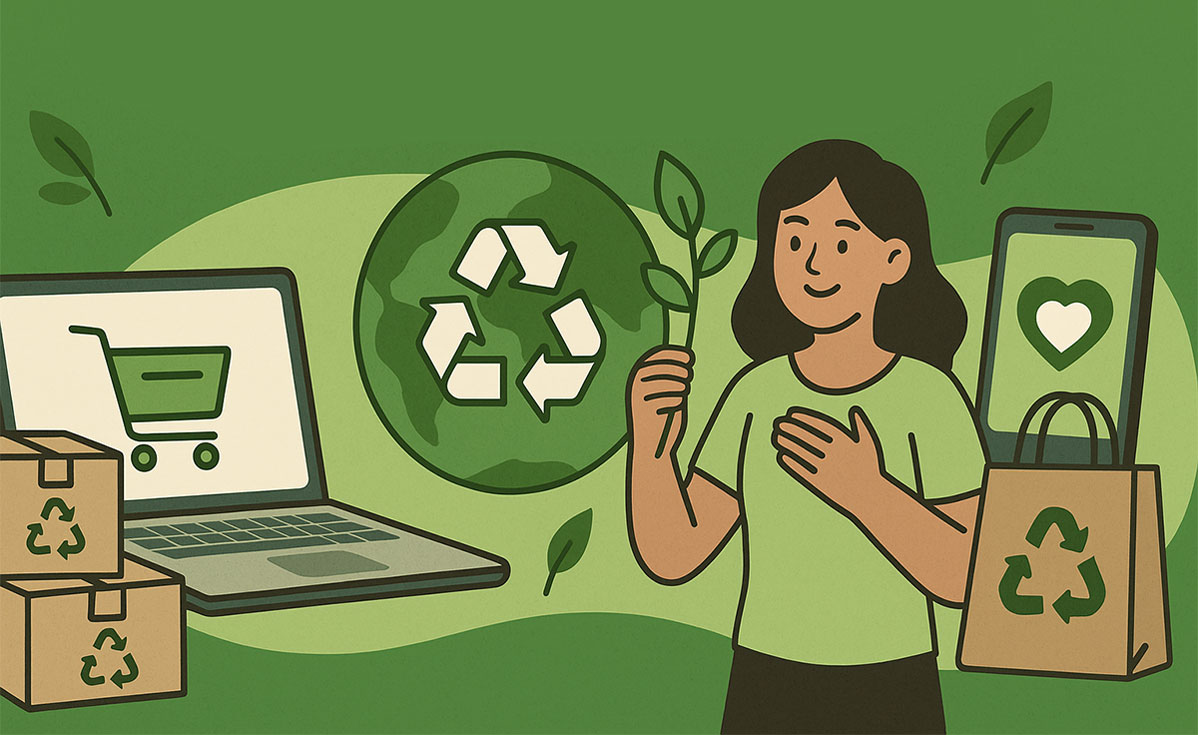


Want to know the biggest challenge facing e-commerce platforms today?
It's not about faster delivery or better prices anymore. The real game-changer is sustainability. Every single day, more consumers are demanding that businesses take responsibility for their environmental impact.
Here's the thing: The numbers don't lie. Carbon emissions from e-commerce logistics are forecast to hit 25 million metric tons by 2030 in major urban areas alone. That's a massive environmental footprint that can't be ignored.
And consumers? They're paying attention. 46% of consumers now consider a retail brand's sustainability record as an important deciding factor when choosing where to shop.
What you'll discover:
- The Real Impact of Sustainable E-commerce
- Why Consumers Are Driving the Green Revolution
- Essential Sustainability Strategies That Work
- How to Future-Proof Your Business
The Environmental Reality Check
Let's be honest about what we're dealing with.
E-commerce has exploded in recent years, but it's come with a serious environmental cost. Every package shipped, every return processed, and every piece of packaging used contributes to our planet's growing sustainability crisis.
But here's where it gets interesting...
Modern e-commerce platforms are starting to realize that sustainability isn't just about doing good – it's about staying competitive.
When you're building or optimizing your online store, working with specialists like a Hyvä theme Agency can help you create more efficient, faster-loading e-commerce platforms that naturally consume less energy and provide better user experiences.
The stats are pretty clear. The sustainable e-commerce market is projected to reach $40.75 billion by 2030, growing at a compound annual growth rate of 15.38%. That's not just a trend – that's a massive shift in how business gets done.
Why Consumers Are Leading the Charge
Want to know what's really driving this sustainability revolution?
It's not government regulations or corporate initiatives. It's consumers who are putting their money where their values are.
85% of consumers now report experiencing first-hand the disruptive effects of climate change in their daily lives. That's not some abstract concept anymore – it's personal.
And they're willing to pay for it. Research shows that consumers are willing to spend an average of 9.7% more on sustainably produced goods, even with inflation and cost-of-living pressures weighing on their budgets.
But there's a catch...
Here's the problem: 40% of consumers say they're not comfortable purchasing from companies that aren't actively tracking toward sustainability goals. That means if you're not taking concrete action, you're literally losing customers.
The trust factor is huge. Nearly 70% of consumers now conduct research before trusting a brand's sustainability claims. They're not just buying your products – they're buying into your values.
The Essential Sustainability Strategies
Ready to make your e-commerce business more sustainable? Here are the strategies that actually work:
Eco-Friendly Packaging Revolution
This is probably the easiest place to start. Traditional packaging is wasteful, expensive, and frankly, customers hate it.
Smart e-commerce businesses are switching to:
- Biodegradable materials that break down naturally
- Recyclable packaging that customers can easily dispose of properly
- Right-sized packaging that eliminates waste and reduces shipping costs
- Reusable containers for repeat customers
The sustainable e-commerce packaging market alone was valued at $35.6 billion in 2024 and is growing at 8.6% annually. Companies aren't just doing this to be nice – they're doing it because it makes financial sense.
Carbon-Neutral Shipping
Shipping is where e-commerce really impacts the environment. But there are ways to fix this:
Offset programs let you neutralize the carbon footprint of every shipment. Many companies now offer customers the option to choose slower, more environmentally friendly shipping methods.
Consolidated shipping reduces the number of individual packages by combining orders when possible.
Local fulfillment centers cut down on shipping distances and delivery times.
Sustainable Supply Chain Optimization
This is where the real magic happens. Instead of just fixing the end result, you're addressing the root cause.
Ethical sourcing means working with suppliers who share your sustainability values. Fair trade practices ensure that everyone in your supply chain benefits.
Inventory optimization reduces waste by better predicting demand and avoiding overstock situations. And if you want to take it a step further, find a 3PL logistics company with proven green initiatives to help streamline operations while reducing your carbon footprint.
Digital-First Approaches
Here's something most people don't think about: going digital wherever possible.
Electronic receipts instead of paper ones. Digital marketing instead of printed materials. Online customer service instead of phone support, which requires energy-intensive call centers.
Even your website's performance matters. Faster-loading sites consume less energy and provide better user experiences.
The Trust Factor
Want to know the biggest mistake e-commerce businesses make with sustainability?
Greenwashing.
57% of consumers believe that brands they use are guilty of making exaggerated or misleading claims about sustainability.
That's a massive trust problem.
Here's what works instead:
- Transparent reporting on your actual environmental impact
- Third-party certifications that verify your claims
- Regular updates on your sustainability progress
- Honest communication about areas where you're still improving
Consumers appreciate honesty. They'd rather work with a business that admits it's still learning than one that makes false claims.
The Competitive Advantage
Still not convinced that sustainability is worth the investment?
Consider this: 70% of consumers now value sustainable brands. That's not a niche market anymore – that's the majority.
Companies that embrace sustainability aren't just doing the right thing. They're positioning themselves for long-term success in a marketplace where environmental responsibility is becoming table stakes.
The benefits go beyond just customer acquisition:
- Lower operational costs through reduced waste and energy efficiency
- Better brand reputation that attracts top talent and partners
- Regulatory compliance that keeps you ahead of upcoming legislation
- Innovation opportunities that can lead to new revenue streams
Making It Practical
Ready to get started? Here's how to implement sustainable practices without breaking the bank:
Start small. Pick one area, like packaging, and focus on making meaningful improvements there before expanding.
Measure everything. You can't improve what you don't track. Set up systems to monitor your environmental impact.
Communicate your efforts. Don't hide your sustainability initiatives. Share your progress with customers and stakeholders.
Partner with experts. Work with suppliers, logistics providers, and technology partners who share your sustainability goals.
The Bottom Line
Sustainable practices in e-commerce aren't just a nice-to-have anymore – they're a business necessity.
The data is clear: consumers are demanding more sustainable options, they're willing to pay for them, and they're abandoning brands that don't take environmental responsibility seriously.
The companies that figure this out now will have a massive competitive advantage. Those that wait? They'll be playing catch-up in a market that's already moved on.
The question isn't whether you should embrace sustainability in your e-commerce business. The question is how quickly you can implement these changes and start reaping the benefits.
Your customers are ready. Your competitors are catching on. The only question left is: Are you?