

Another day, another email offering me a "well-written, SEO-optimized article" for my blog.
I started this site in 2018 and have been blogging on it almost ever since, so I've been on the receiving end of guest post pitches for years.
I've read the emails. I've opened the drafts. I've said yes to some of them, and I regret more of those yeses than I'd like to admit.
So let me say out loud what publishers complain about in private and what link builders already know: the guest post industry is broken. The pitches are lazy, the drafts are worse, and the whole thing runs on one idea. Do as little as possible and hope nobody checks.
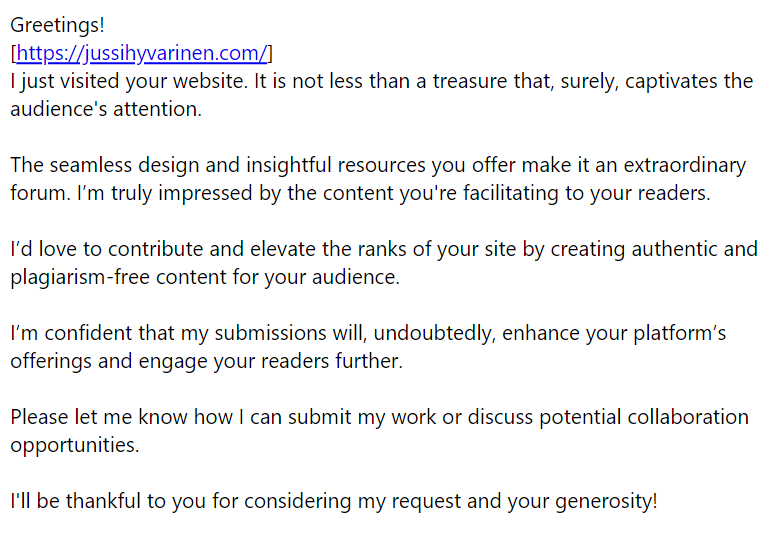
Two Kinds of People Fill My Inbox
Nearly everyone who pitches me belongs to one of two groups.
The Gmail Crowd
The first group writes from a Gmail address, and I don't even bother starting a conversation with them anymore. It's always the same formula. They're ready to pay a laughable sum for a permanent spot on a site that took me years to build.
And that's the honest part of the group. Some of them are plain scammers. You publish what they asked for, and the money never arrives.
The "Agencies"
The second group looks more serious. There's a real domain in the email address, so there seems to be a company behind it. At least that's what the domain suggests, because it's usually the only evidence I get.
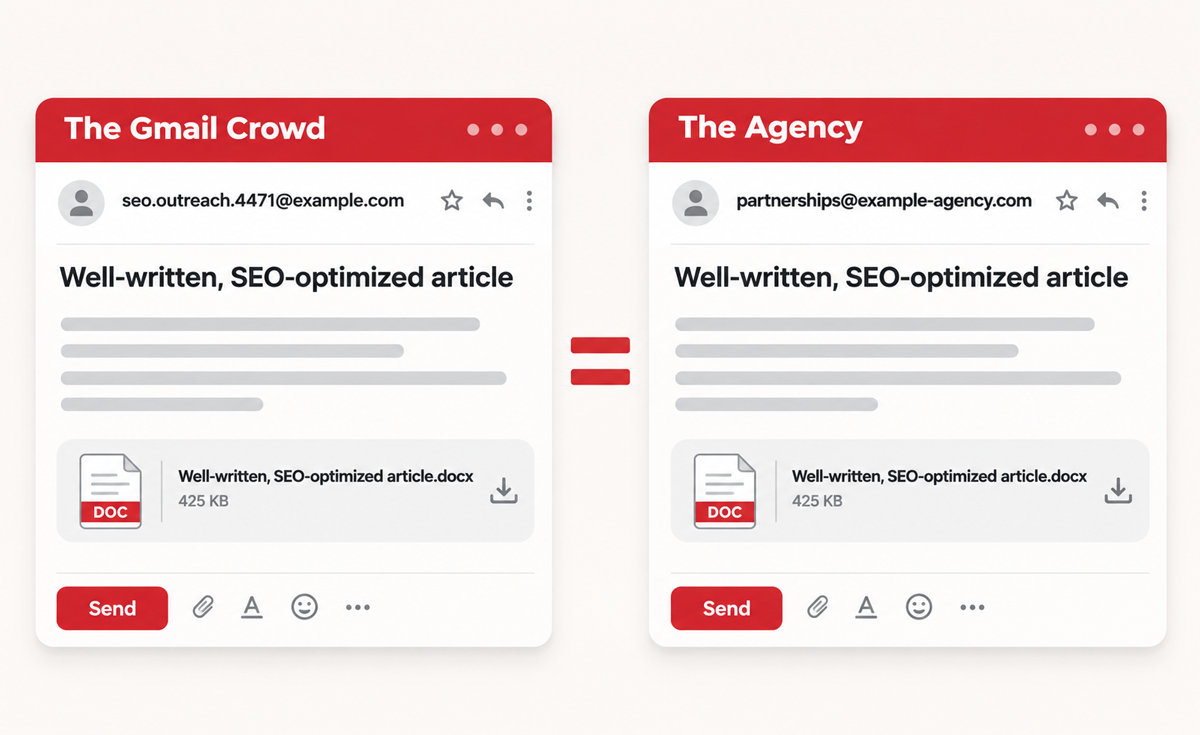
You'd expect a better address to come with a better product. It doesn't, and that's the part that really gets to me. The draft from the company with a website is the same draft I get from the Gmail address.
Every Draft Is the Same Draft
Every guest post draft I've ever received, without exception, has been the same thing: a low-effort, thin, generic slab of text. I don't care whether a human or an AI wrote it.
I say that as someone who builds AI writing software, and AI-written articles are welcome here if they're good. What I care about is effort, and there isn't any. Nobody looked for a fact. Nobody checked a claim. Nobody asked what my readers would get from this article that they can't get from the ten others on the same topic.
As I wrote in my post about information gain, repeating what everyone else has already said is exactly what doesn't work anymore. Why would anyone bother? The link is the only thing they care about. The article is packaging, and they always pick the cheapest packaging available. They step over the fence where it's lowest and move on to the next site on the spreadsheet.
This Garbage Costs Publishers More Than It Pays
This kind of content has no value for the site that publishes it. Readers don't want it, and Google has no reason to send anyone to it. Worse, it weakens the site in Google's eyes, especially when you publish a lot of it.
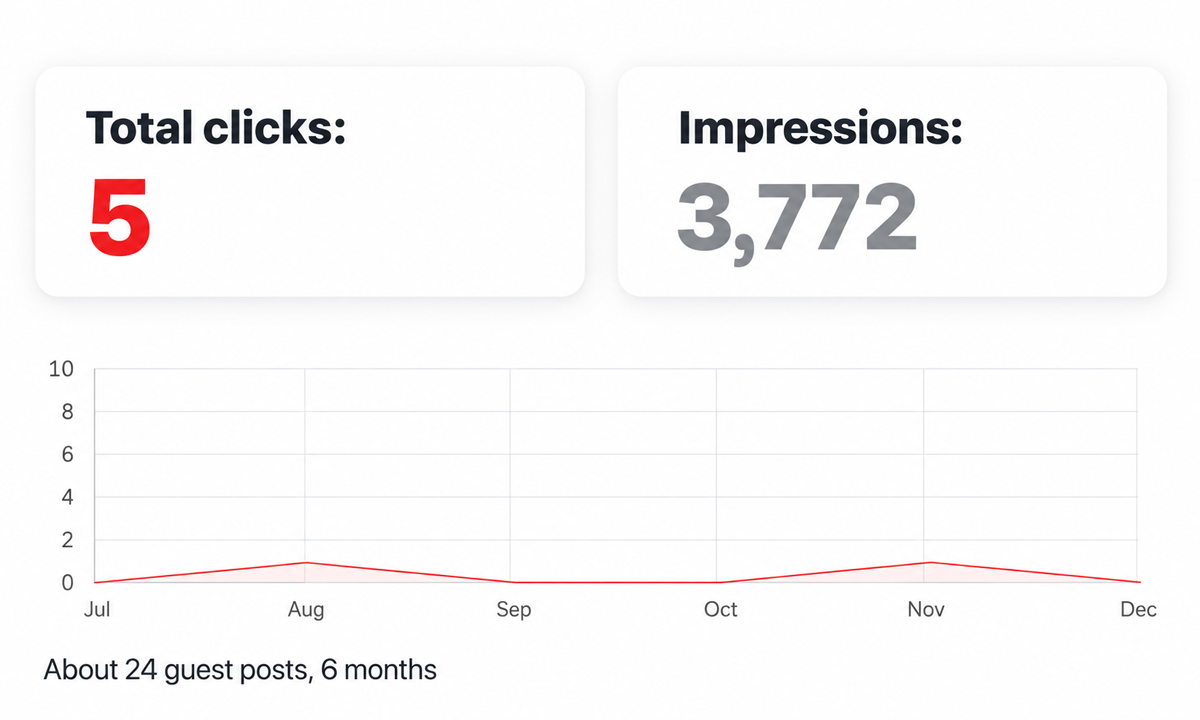
I checked this on my own site. About two dozen articles published here since May 2025 look like guest posts. In six months, they brought in 5 clicks from 3,772 impressions. Not 5 clicks each. Five clicks in total. That's what a "well-written, SEO-optimized article" does in real life.
Google spam policies aren't vague about this either. The link spam section specifically names "links with optimized anchor text in articles, guest posts, or press releases" on other sites. Buying and selling links for ranking purposes is on the same list. Publishing masses of pages to manipulate rankings counts as scaled content abuse, however those pages were made.
I've written about quality over quantity in backlinks before, and it's still the only approach that makes sense.
It Doesn't Even Work for the People Sending It
Here's what baffles me most. This approach is bad for link builders too. A link on a page nobody reads, on a site that accepts anything, is a weak thing to sell a client. Every rejected draft is a wasted pitch, and every revision round is unpaid time.
I reject most of what I receive, and the most common reasons are shallow content and unverified claims. The sites that accept your worst draft without a word are exactly the sites your client shouldn't want a link from.
The cheap draft isn't cheap. You pay for it later, in rejections, revisions and placements that do nothing.
The Fix Already Exists
The frustrating part is that doing this properly no longer takes much time or money. Full disclosure: I'm a co-founder of ProofWrite, the company behind the tool I'm about to recommend, so weigh this section accordingly.
ProofWrite Guest Post Builder writes guest posts that are, in my honest opinion, 100 times better than anything these people have ever sent me. The difference is in the process: You start from the link. Paste the client URL, the anchor text and any notes about the target site.
It finds an angle first. ProofWrite suggests topics where the link works as a natural reference, and you pick one. The article has a reason to exist besides the link. Research comes before writing. Research agents gather sources and data first, so the citations are real and the article has something to say.
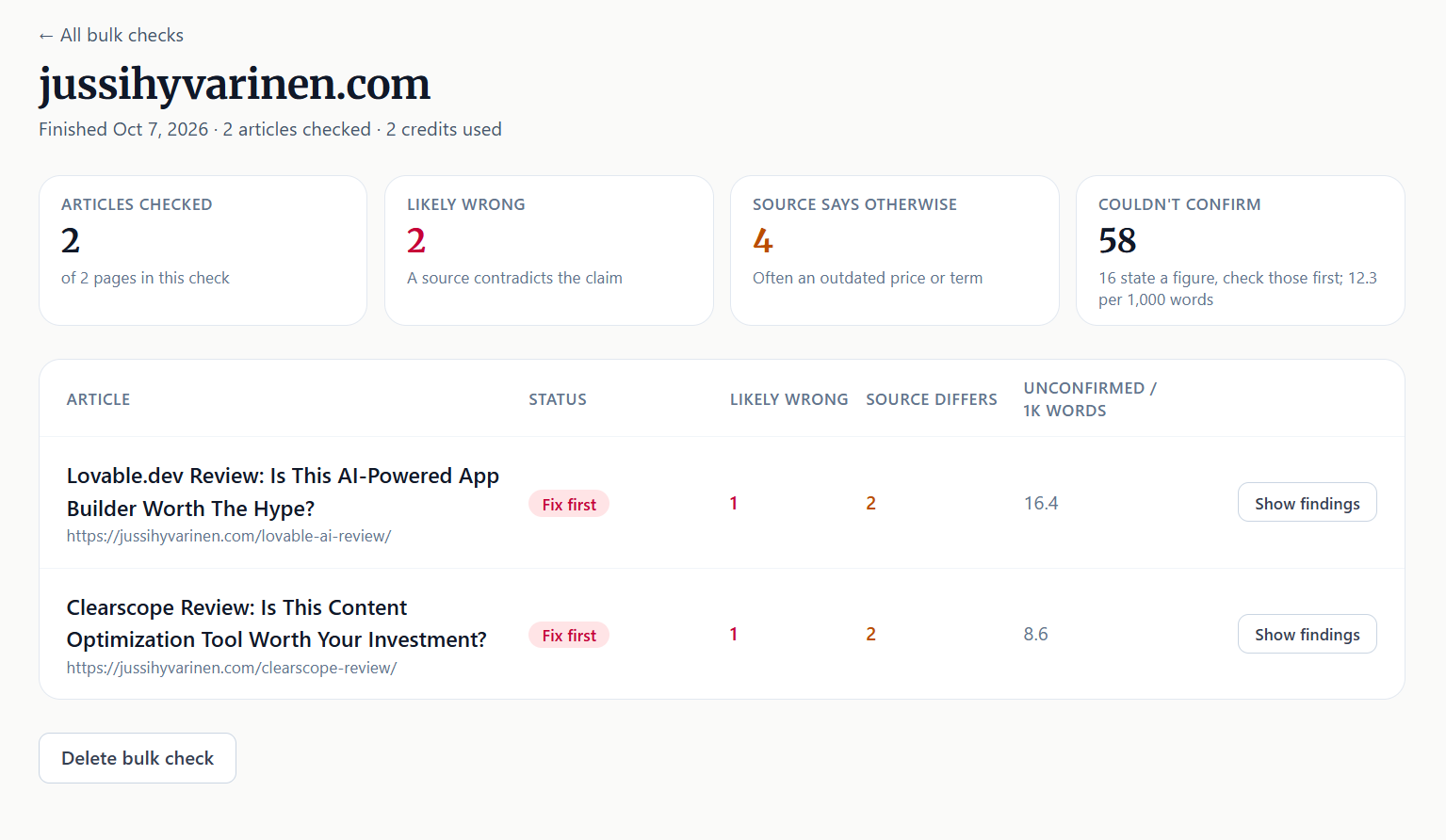
Every claim gets checked. The fact checker marks claims as Supported, Likely wrong or Couldn't confirm, and you fix the problems before you pitch. It doesn't read like a template. The style engine removes common AI patterns and matches the tone of the host site.
You can try it with a free pilot article, without a credit card, and paid plans start at $49 per month.
If you want to see how bad your current drafts are first, paste one into the free Guest Post Checker. It grades the draft on AI tells, link naturalness and editorial quality, and you don't need to sign up.
Link builders could do themselves a favor here, and every site they pitch along with them. They'd get fewer rejections. Publishers would get something they aren't embarrassed to put their name on. Readers would get an article worth reading.
That's a better deal for everyone than what we have now.
What a Tool Won't Fix
A better draft doesn't solve everything, so let's be clear about the limits:
- Relevance. If your client's business has nothing to do with the site, no article will make that link belong there.
- Paid links. A good article doesn't change Google's rules. Google allows paid links when they're qualified, for example with rel="sponsored". Volume for its own sake. Using AI to churn out pages that add nothing for readers is still spam. Good software in lazy hands gives you lazy content faster.
- Judgment. Someone still has to read the draft and decide whether it deserves to exist.
A Message to Everyone in My Inbox
If you're about to send me another pitch, here's my advice. Stop telling me your article is well-written and SEO-optimized. Show me. Read the site before you pitch it. Bring a fact, a source or an angle I haven't seen a hundred times. Send a draft you'd be happy to publish on your own site. And if you wouldn't publish it on your own site, why on earth are you sending it to mine?
To my fellow publishers: stop waving this stuff through. One small payment isn't worth what this content does to a site you've spent years building.
Guest posting doesn't have to die. Done properly, it's still a good way to get a useful article in front of a new audience.
But the industry has to start caring about the article again, not just the link in it.
So do us all a favor: try ProofWrite before you hit send. I'll know the difference by the end of the first paragraph.