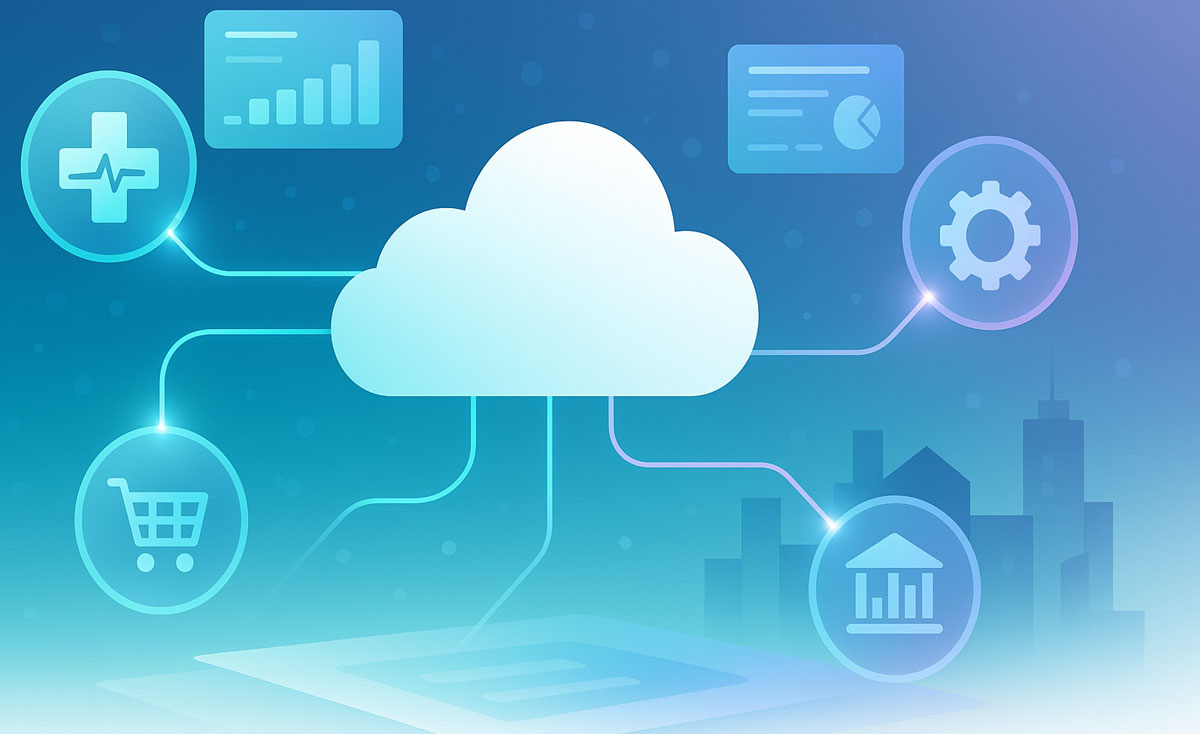


Remember when implementing new software meant months of installation, hefty server costs, and IT headaches? Those days are gone. Software-as-a-Service has fundamentally changed how businesses operate, and I've seen firsthand how this shift impacts organizations of all sizes.
What makes SaaS particularly compelling isn't just the subscription model, it's the democratization of powerful technology. Small startups now access the same caliber of tools that Fortune 500 companies use.
Updates happen seamlessly in the background. Teams collaborate without geographic boundaries. And perhaps most importantly, businesses can experiment with new solutions without massive upfront commitments.
Let me walk you through how various industries are utilizing these tools to address real-world problems.
Healthcare Gets Smarter, Not Harder
Healthcare organizations face an impossible balancing act: delivering better care, maintaining strict compliance, and keeping costs down. I've watched many healthcare providers struggle with this trinity of challenges until they discovered the right SaaS solutions.
Electronic health records have evolved from digital filing systems into intelligent information management systems.
When doctors can instantly access complete patient histories, including records from other facilities, diagnosis becomes faster and more accurate. No more duplicate tests because records were stuck in another system.
Virtual care platforms have proven their worth beyond pandemic necessity. Patients in rural areas connect with specialists hundreds of miles away. Follow-up appointments happen without waiting rooms.
The technology handles appointment scheduling, reminders, and even prescription management, while maintaining HIPAA compliance.
Speaking of compliance, automated tools now handle the heavy lifting of regulatory reporting. Instead of dedicating staff to paperwork, healthcare organizations focus on what matters: patient care.
For organizations requiring more extensive customization, partnering with a healthcare web development company that specializes in HIPAA-compliant solutions ensures the technology integrates seamlessly into existing clinical workflows.
E-commerce: Where Speed Meets Precision
Running an online store used to mean choosing between growth and control. Scale too fast, and inventory management becomes chaos. Move too slowly, and competitors eat your lunch. Modern SaaS platforms have eliminated this false choice.
Real-time inventory tracking has solved the overselling nightmare that plagued early e-commerce. When a customer adds an item to their cart, the system knows exactly what's in stock, what's in transit, and what needs to be reordered. This visibility extends across multiple warehouses and sales channels.
Order fulfillment automation has transformed shipping from a bottleneck into a competitive advantage. Orders flow automatically from the website to the warehouse and then to the shipping label.
Customers get tracking information immediately. Returns process smoothly. The entire cycle occurs with minimal human intervention, thereby reducing errors and accelerating delivery.
But the real game-changer?
Understanding your customers. Analytics platforms now track every interaction, revealing patterns humans would never spot. Which products do customers view together? What makes them abandon carts? When are they most likely to buy?
This intelligence drives personalized recommendations and targeted campaigns that actually work, dramatically improving customer engagement and lifetime value.
Education Without Boundaries
The classroom has expanded beyond its four walls, and learning management systems have made it possible. Teachers create courses that students access anywhere, anytime.
Progress tracking happens automatically. Assessments grade themselves. The administrative burden that once consumed educators' time has largely disappeared.
What excites me most about educational SaaS is how it personalizes learning. Students move at their own pace. Those who grasp concepts quickly advance without waiting.
Those who need more time get it without embarrassment. The system adapts to individual learning styles, suggesting resources tailored to each student's needs.
Collaboration tools have made group projects productive. Students share documents, hold virtual study sessions, and provide peer feedback – all within integrated platforms.
Teachers monitor participation and guide discussions without being physically present. The result? More engaged students and better learning outcomes.
Marketing That Actually Works
Marketing automation once meant spam. Today's SaaS platforms enable sophisticated, personalized campaigns that feel genuinely helpful rather than intrusive. The difference lies in intelligence and timing.
Modern platforms track every interaction across channels. Website visits, email opens, social media engagement – everything feeds into a unified view of each prospect.
Automated workflows then deliver the right message at the right moment. Someone downloads a whitepaper? They get a follow-up email series tailored to their interests. Someone abandons a cart? They receive a personalized reminder with relevant recommendations.
The analytics capabilities have transformed guesswork into science. Marketers see exactly which campaigns drive revenue, which messages resonate, and which channels deliver ROI.
A/B testing happens continuously, automatically optimizing campaigns based on real results. Small businesses now run marketing operations that rival enterprise programs from just a few years ago.
Financial Services: Security Meets Innovation
Financial institutions live in a world of strict regulations and zero tolerance for errors. SaaS platforms have made compliance manageable while actually improving service delivery.
Automated compliance tools track regulatory changes and update procedures accordingly. Reports generate automatically with perfect accuracy. Audit trails maintain themselves.
What once required teams of compliance officers now happens in the background, freeing staff to focus on client relationships.
Customer relationship platforms have revolutionized how financial advisors work. Every interaction gets logged automatically. AI suggests the next best actions based on a client's history and market conditions. Onboarding, which once took weeks, now completes in hours. Clients get better service while advisors handle more accounts effectively.
Security remains paramount, and modern SaaS platforms deliver. Multi-factor authentication, encryption, continuous monitoring – enterprise-grade protection comes standard. Financial institutions get better security than they could build themselves, without the maintenance burden.
The Bottom Line
SaaS isn't just about moving software to the cloud. It's about transforming how businesses operate.
Every industry I've examined shows the same pattern: reduced costs, improved efficiency, better outcomes. The technology continues to advance, prices continue to drop, and capabilities continue to expand.
For businesses still hesitating, consider this: your competitors aren't waiting. They're already using these tools to serve customers better, operate more efficiently, and make smarter decisions. The question isn't whether to adopt SaaS solutions – it's which ones to implement first.
The transformation won't happen overnight, but it will happen. Start small, measure results, and scale what works. The tools are available, affordable, and proven. All that's required is the decision to begin.