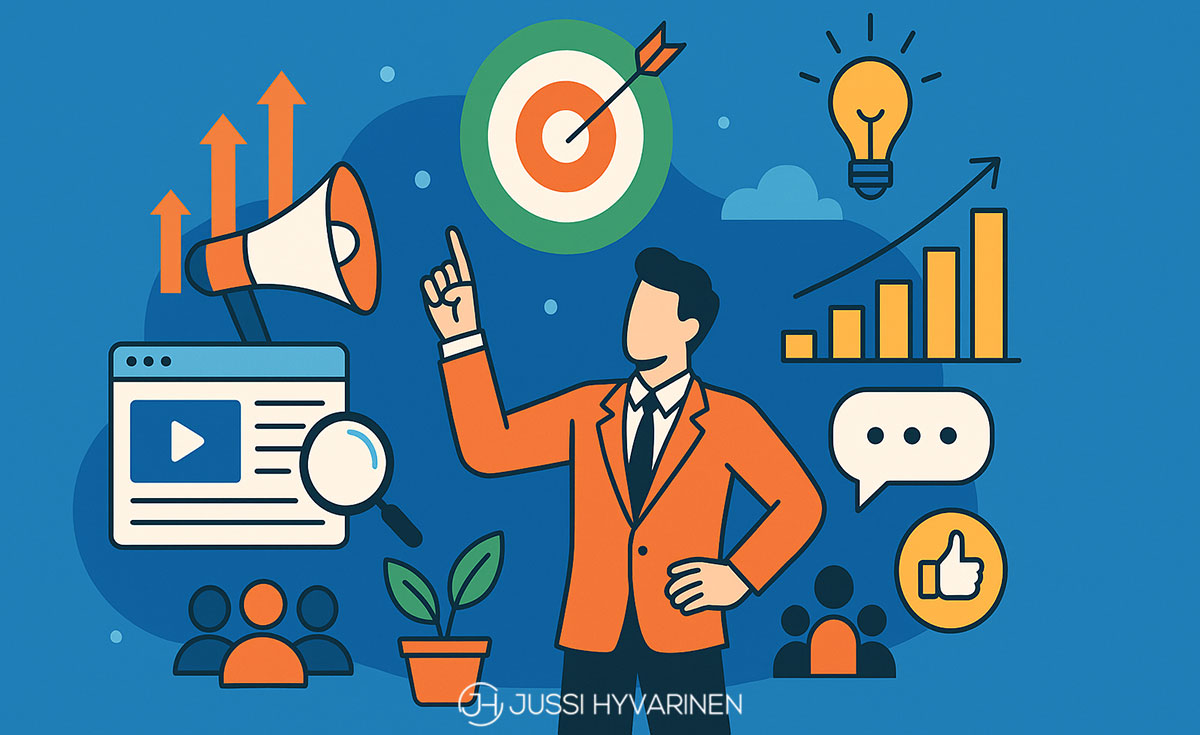


If you want sustainable, long-term growth that doesn't vanish the moment you stop swiping your credit card, you need to master organic marketing.
While paid advertising is like renting attention, effective only as long as you pay the rent, organic marketing is like buying a home. It allows you to build equity in your brand, creating a foundation of trust and visibility that compounds over time.
You are likely here because you are tired of rising ad costs or you simply want to build a more authentic connection with your audience. Organic marketing focuses on generating traffic to your business naturally over time rather than using paid methods. It includes blogging, guest posting, social media tweets, and SEO.
In this guide, you will learn exactly how to deploy a comprehensive organic strategy. You will move beyond simple "posting and praying" to implementing data-backed techniques that drive traffic, engage users, and convert visitors into loyal advocates.
1. Understand the Core of Organic Marketing
Before you execute specific tactics, you must align your mindset with the mechanics of organic growth. Organic marketing is not just "free marketing."
It is an investment of time, creativity, and consistency rather than direct ad spend. Its primary goal is to enhance business visibility through unpaid channels such as SEO, content creation, and social media engagement.
Unlike paid campaigns that deliver immediate but fleeting results, organic marketing builds a strong foundation. It focuses on solving customer problems and answering their questions.
When you create value, you attract customers naturally. This approach is cost-effective and yields ongoing returns because high-ranking content and a strong social reputation continue to drive traffic for years after the initial work is done.
Why It Matters
If you rely solely on paid ads, your traffic drops to zero the second your budget runs out. Organic marketing insulates your business from market volatility and ad price hikes.
It establishes authority; customers trust a business that appears at the top of search results organically far more than they trust a sponsored link.
Success Check:
- You can articulate the difference between "rented" traffic (paid) and "owned" traffic (organic).
- You have identified your primary goal: brand awareness, lead generation, or community building.
2. Implement Comprehensive SEO Optimization
Search Engine Optimization (SEO) is the engine that powers organic discovery. If your website is not optimized, you are invisible to the people actively searching for what you offer. This step focuses on improving your website rankings naturally without paying for placement.
Start with technical SEO. Ensure your site loads quickly, is mobile-friendly, and has a clean structure that search engine crawlers can navigate easily. If Google cannot read your site, it cannot rank it.
Next, focus on keyword strategy. You need to target relevant keywords that your audience is actually typing into the search bar. This involves researching high-volume, low-competition terms that align with your business offerings. Place these keywords naturally in your page titles, headers (H1, H2), and meta descriptions.
Actionable Steps:
- Audit your site: Use free tools to check for broken links and slow load times.
- Research keywords: Identify 10-20 core terms your customers use.
- Optimize on-page elements: Rewrite your homepage and service page titles to include these keywords.
Success Check:
- Your website passes a basic mobile-friendly test.
- Your main service pages utilize specific keywords in the title tags and headers.
3. Develop High-Quality, Valuable Content
Content is the currency of organic marketing. To rank in search engines and capture attention on social media, you must produce content that genuinely serves your audience's needs. This establishes your brand as a trusted resource rather than just a vendor.
Focus on producing blog posts, guides, tutorials, and educational materials that solve specific problems. "Thin" content, short, vague, or repetitive articles, will not cut it. You need to provide substantial, complete descriptions of topics.
For instance, if you are in a specialized industry, your content must demonstrate deep expertise. A generic overview won't work for complex fields; highly specific strategies, like those used in digital marketing for law firms, require content that addresses niche pain points and establishes high-level professional authority.
Consistency is just as critical as quality. A blog that hasn't been updated in six months signals to both users and search engines that the business might be inactive. Create a content calendar and stick to it, whether that’s once a week or once a month.
Actionable Steps:
- Identify customer pain points: List the top 10 questions your sales team gets asked.
- Create "Pillar" content: Write comprehensive guides that answer these questions in depth.
- Format for readability: Use bullet points, short paragraphs, and images to break up text.
Success Check:
- You have published at least one comprehensive guide (1,000+ words) addressing a major customer problem.
- You have a content calendar scheduled for the next 30 days.
4. Build Authentic Social Media Engagement
Many businesses mistake social media for a megaphone, using it only to broadcast sales messages. To succeed organically, you must use it as a telephone, a two-way communication channel. You need to connect genuinely with your audience without relying on paid promotions.
Share engaging posts that invite conversation. Ask questions, run polls, and tell stories about your team or your customers. Crucially, you must respond to comments. When a user takes the time to comment on your post, ignoring them is like walking away from someone speaking to you in a store.
Participate in conversations outside your own page. Join relevant groups or threads where your industry is discussed and offer helpful advice without immediately pitching your product. This builds community and drives traffic to your profile naturally.
Actionable Steps:
- Choose your platform: Focus on the 1-2 platforms where your audience is most active (e.g., LinkedIn for B2B, Instagram for lifestyle).
- The 80/20 Rule: Dedicate 80% of your posts to adding value (education, entertainment) and only 20% to direct selling.
- Engage daily: Spend 15 minutes a day commenting on other people's posts in your niche.
Success Check:
- You have replied to every comment on your business page in the last week.
- Your engagement rate (likes/comments per post) is trending upward.
5. Maximize Your Existing Business Resources
Organic growth does not always require finding new things; often, it requires better utilizing what you already have. Your existing products, current content, and satisfied customers are assets waiting to be leveraged.
Analyze what is currently working. If a specific blog post is getting traffic, update it with new information and a stronger call to action. If a particular product has a high satisfaction rate, feature it more prominently in your content.
You should also look at your internal data to improve your offerings. Use customer feedback to refine your products or services. When you improve your core offering based on user input, you create a better product that is easier to market organically because it perfectly fits the market need.
This approach is more sustainable than constantly trying to invent new product lines to capture attention.
Actionable Steps:
- Repurpose content: Turn your most popular blog post into a video, an infographic, and a series of social media posts.
- Refresh old pages: Update articles older than a year with current statistics and fresh examples.
- Survey customers: Ask your current client base what one feature they wish you had, and prioritize it.
Success Check:
- You have identified your top 3 performing pieces of content and updated them.
- You have repurposed one piece of long-form content into three different formats.
6. Track Performance with Analytics Tools
You cannot improve what you do not measure. To ensure your organic marketing is actually working, you must monitor your efforts using analytics tools. This helps you understand where to double down and where to cut your losses.
Track metrics like organic traffic (visitors coming from search engines), engagement rates (time on site, pages per session), and conversion rates (how many visitors become leads).
Tools like Google Analytics are essential here. They show you which channels drive the most traffic and how visitors behave once they arrive.
Data-driven insights allow you to refine your strategy. If you see that your "How-to" guides drive 50% of your traffic but your "Company News" posts drive zero, you know exactly what to write next week.
Actionable Steps:
- Install analytics: Ensure Google Analytics (or a similar tool) is active on your site.
- Set goals: Define what a "conversion" is (form fill, purchase, newsletter signup) and track it.
- Review monthly: Set a recurring meeting to review which pages gained the most traffic and why.
Success Check:
- You can log in to your analytics dashboard and identify your top traffic source.
- You know which specific page on your site converts the most visitors.
7. Foster Genuine Customer Relationships
Customer retention is a critical, often overlooked engine of organic growth. It is far easier and cheaper to sell to an existing customer than to acquire a new one. By building lasting relationships through authentic interactions, you turn customers into loyalists who stick around.
Focus on providing exceptional service. Respond promptly to inquiries and solve problems with empathy. Show appreciation for their loyalty through thank-you notes, exclusive previews, or simply recognizing them by name.
Engaged customers naturally become brand advocates. When people feel valued, they talk about it. This creates a cycle where your current customers do your marketing for you.
Actionable Steps:
- Personalize communication: Use customers' names in emails and responses.
- Post-purchase follow-up: Send a personal email checking in on how they are enjoying the product, not asking for a sale.
- Community building: Create a space (like a VIP Facebook group or a customer slack channel) for your users to connect.
Success Check:
- You have a process in place for following up with customers after a purchase.
- You have received positive feedback regarding your customer support or engagement recently.
8. Cultivate Word-of-Mouth Marketing

Word-of-mouth is the holy grail of organic marketing. People trust recommendations from friends and family infinitely more than they trust your corporate messaging. Your goal is to leverage satisfied customers to spread awareness about your business organically.
You must make it easy for them to share. Create shareable moments, whether that’s an unboxing experience worth filming or a service result that is transformative.
You can also implement referral programs that incentivize customers to recommend your business. However, the incentive is secondary to the experience; if the product is bad, no reward will generate genuine referrals.
Actionable Steps:
- Ask for reviews: Automate a request for a review after a customer has had time to experience success with your product.
- Create a referral loop: Offer a small discount or perk to both the referrer and the new customer.
- User-Generated Content (UGC): Encourage customers to post photos of your product and tag you. Repost this content (with permission) to show social proof.
Success Check:
- You have an active referral program or a clear process for asking for referrals.
- You are featuring customer testimonials or UGC on your website or social channels.
9. Apply E-commerce-Specific Organic Strategies
If you run an online store, organic marketing takes on a specific flavor. You need to focus on tactics tailored to e-commerce success, such as product page optimization and email marketing.
Don't just copy the manufacturer's product description. Write unique, keyword-rich descriptions that highlight benefits, not just specs. This helps you rank for specific product searches.
Furthermore, encourage customer reviews directly on product pages. Reviews provide fresh, unique content for search engines and build massive trust for human visitors.
Email marketing is another powerful organic tool for e-commerce. It allows you to nurture relationships with people who aren't ready to buy yet. Send buying guides, comparison content, and educational resources, not just sales blasts.
Actionable Steps:
- Rewrite product descriptions: Ensure every product has at least 150 words of unique, benefit-driven copy.
- Enable reviews: Make sure your review widget is visible and crawlable by search engines.
- Nurture sequence: Set up an automated email sequence for abandoned carts or new subscribers that offers help, not just a discount.
Success Check:
- Your product pages feature unique descriptions and customer reviews.
- You have an email list that you communicate with regularly (weekly or bi-weekly).
10. Commit to Long-Term Consistency
This is the step where most businesses fail. Organic marketing requires patience. Unlike paid ads, you cannot turn it on and off like a faucet. It takes time to build authority with search engines and trust with people.
You must commit to a regular schedule. If you blog weekly, do not stop after three weeks because you didn't see a sales spike. Organic growth is exponential, not linear. It starts slowly, often looking like nothing is happening, and then compounds rapidly once you reach a critical mass of content and authority.
Focus on quality over quantity, but maintain the quantity over time. Authentic, valuable contributions will always outperform rushed, low-quality content in the long run.
Actionable Steps:
- Set a 6-month horizon: Commit to your strategy for six months before making major pivots or quitting.
- Batch production: Write a month's worth of social posts or blog outlines in one sitting to ensure you don't miss weeks when you get busy.
- Celebrate small wins: Track leading indicators like "impressions" or "ranking improvements" to stay motivated before the sales roll in.
Success Check:
- You have a defined publishing schedule that you have stuck to for at least one month.
- You understand that results may take 3-6 months to become significant.
Tips & Troubleshooting
Pro Tips for Maximum Impact
- Focus on Headlines: The headline is the only thing 80% of people will read. Spend as much time writing the headline as you do the article.
- Use Video: Video content often has higher organic reach on social platforms than text or images. Short-form video (Reels, Shorts) is particularly effective for organic discovery.
- Internal Linking: Always link your new content to your older content. This helps search engines crawl your site and keeps users engaged longer.
- Guest Posting: Write articles for other reputable sites in your industry. This builds backlinks (crucial for SEO) and exposes you to a new audience.
- Update Dates: When you refresh content, change the "Published" date to the "Last Updated" date so users (and Google) know it's fresh.
Troubleshooting Common Issues
"I'm writing content, but no one is reading it."
- Check: Are you targeting keywords that people actually search for? Use a keyword tool to verify volume.
- Check: Is your content promotion weak? You can't just publish; you must share it on social, email, and communities.
"My traffic is high, but no one is buying."
- Check: Your content might be too generic. Ensure you are writing for your buyer, not just for general traffic.
- Check: Do you have clear Calls to Action (CTAs)? Tell the reader exactly what to do next.
"I don't have time to do all this."
- Fix: Focus on ONE channel first. Master SEO or master LinkedIn. Do not try to be everywhere at once.
FAQ
How long does it take to see results from organic marketing?
Generally, you should expect to see traction within 3 to 6 months. SEO specifically can take 6 to 12 months to reach full maturity. However, once established, these results are durable and long-lasting.
Is organic marketing completely free?
Technically, you don't pay for ad space. However, it costs "sweat equity", time, effort, and resources to create content, manage social media, and optimize your site. If you hire staff or agencies to do this, there is a monetary cost.
Can I stop doing organic marketing once I rank high?
No. If you stop creating content and updating your site, your competitors will eventually overtake you. Organic marketing requires maintenance, though the effort required to maintain a lead is often less than the effort to get the lead.
Should I ignore paid ads completely?
Not necessarily. Paid ads and organic marketing work best together. You can use paid ads for immediate results or to test new keywords, while building your organic strategy for long-term sustainability.
Which social media platform is best for organic reach?
This depends entirely on your audience. For B2B, LinkedIn currently offers excellent organic reach. For visual brands, Instagram and Pinterest are key. For younger demographics, TikTok is a powerful organic driver. Go where your customers are.
Conclusion
You now have the roadmap to build a powerful business reach without being held hostage by advertising budgets.
Organic marketing is the path to freedom for your business, freedom from rising ad costs, freedom from platform algorithm changes that wipe out paid performance, and freedom to build a brand that people genuinely love and trust.
The strategies outlined here, from comprehensive SEO and value-driven content to authentic relationship building, are not quick fixes. They are the building blocks of a legacy. By starting today, you are planting seeds that will yield a harvest of traffic, trust, and revenue for years to come.
Do not wait for the "perfect" time or a bigger budget. Audit your site, write that first helpful guide, and engage with your first customer. The best time to start building your organic engine was yesterday; the second-best time is right now.